Whether you are after a first home, a second home, a holiday base or an investment, the appeal of the Alpes du Léman comes down to one thing: your money goes further here than in the better-known parts of Haute-Savoie. The choice runs from village houses and chalets to building land for those who want to start from scratch.
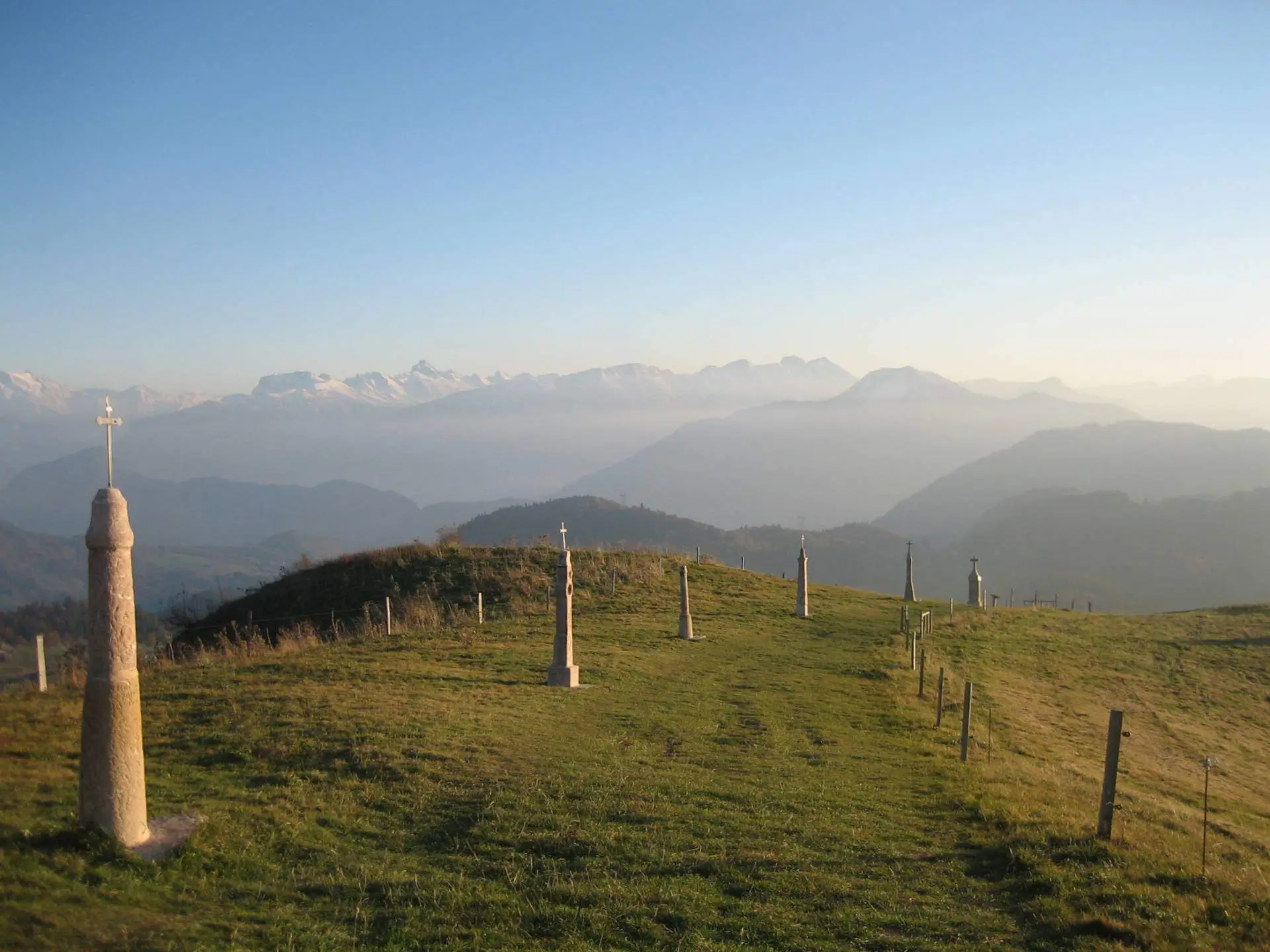
The mountains here are not like those of the bigger resorts further south. These are pastureland and wooded ridges rather than high, bare summits, so they feel more accessible, and the valleys keep a settled, year-round character rather than the seasonal pattern of a purpose-built ski station. The Savoyard traditions of the high Chablais are still part of daily life here.
Where is the Alpes du Léman in Haute-Savoie?
The Alpes du Léman sits in the Haute Chablais, in the east of Haute-Savoie, around 20 minutes from the southern shore of Lake Geneva. The name covers three valleys: the Vallée Verte, the Vallée du Brevon and the Vallée du Risse. Each runs back from the lake into the foothills, so most villages are within a short drive of open water on one side and rising mountains on the other.
Geneva is roughly 40 minutes away by road, with its airport on the same side of the city, and the A40 motorway carries on from there to the rest of Haute-Savoie and the Mont Blanc valley. On the lake itself, Maxilly-sur-Léman and the spa town of Évian-les-Bains give a useful fix on the map: the inland valleys begin just behind that stretch of shoreline. So you are set among the mountains while still being a manageable distance from a major airport and an international city.
Things to do in the Alpes du Léman
Three local ski areas serve the valleys: Les Habères-Hirmentaz, Les Brasses and La Chevrerie. Between them they offer around 125km of pistes between 900m and 1,800m, alongside five cross-country areas and marked snowshoe trails. The terrain suits families and intermediates rather than thrill-seekers, and the bigger resorts of the Mont Blanc region are within about an hour by car for anyone wanting more.
Outside winter the area stays busy. Village fêtes and weekly markets run through the warmer months, and the valleys are well used for cycling, mountain-biking and walking. The rivers and the nearby lake bring water sports, white-water rafting and canyoning, and the ridges above Mieussy are among the places where paragliding first took hold in France.
Habère-Poche
Habère-Poche is situated at 960m and has a population of around 1,260. It is a working village close to the Les Habères ski area, with enough shops and small businesses to cover everyday needs without a drive down the valley. The higher altitude holds the snow a little longer and suits buyers who want to be near the lifts.
Boëge
Boëge sits lower, at 730m, with a population of around 1,730. It is the commercial centre of the Vallée Verte, with a market every Tuesday, a bank, the main post office and a good run of shops. There is a secondary school and an outdoor pool, which makes it a practical base for a family rather than only a holiday spot.
Mieussy
Mieussy sits at 630m with a population of around 2,124 and acts as the gateway to the Praz de Lys/Sommand ski area. The Col de la Ramaz, a climb used in the Tour de France, starts from the village, so the surrounding roads are familiar ground for road cyclists through the summer.
St-Jeoire-en-Faucigny
St-Jeoire-en-Faucigny is the largest of the four, at 580m with a population of around 3,210. It carries a full range of shops, supermarkets and restaurants, and at 40 minutes from Geneva it is the most self-sufficient base of the group for buyers who want town amenities on the doorstep rather than a drive away.
Property prices and investment appeal
Prices in the area stay low for somewhere this close to Lake Geneva. Chalets, village houses, apartments and building land are all found across the valleys, and many of the older chalets follow the traditional layout of three levels with a workshop or store at ground level.
The Vallée Verte has held its value steadily in the short term, broadly flat over the past year, up roughly 6% over five years and up around 70% over the longer term. That mix of recent stability and steady long-run growth is part of what makes the area a sought-after residential area for buyers who want a degree of security in their purchase, though the Alps are not immune to wider economic trends.