The Chamonix Valley
The Chamonix valley covers several distinct villages within a single commune, from Argentière in the north to Les Houches in the southwest, each with its own character and its own property market. Geneva is approximately 90 minutes by road, which makes the valley one of the more accessible alpine destinations in France for international buyers.
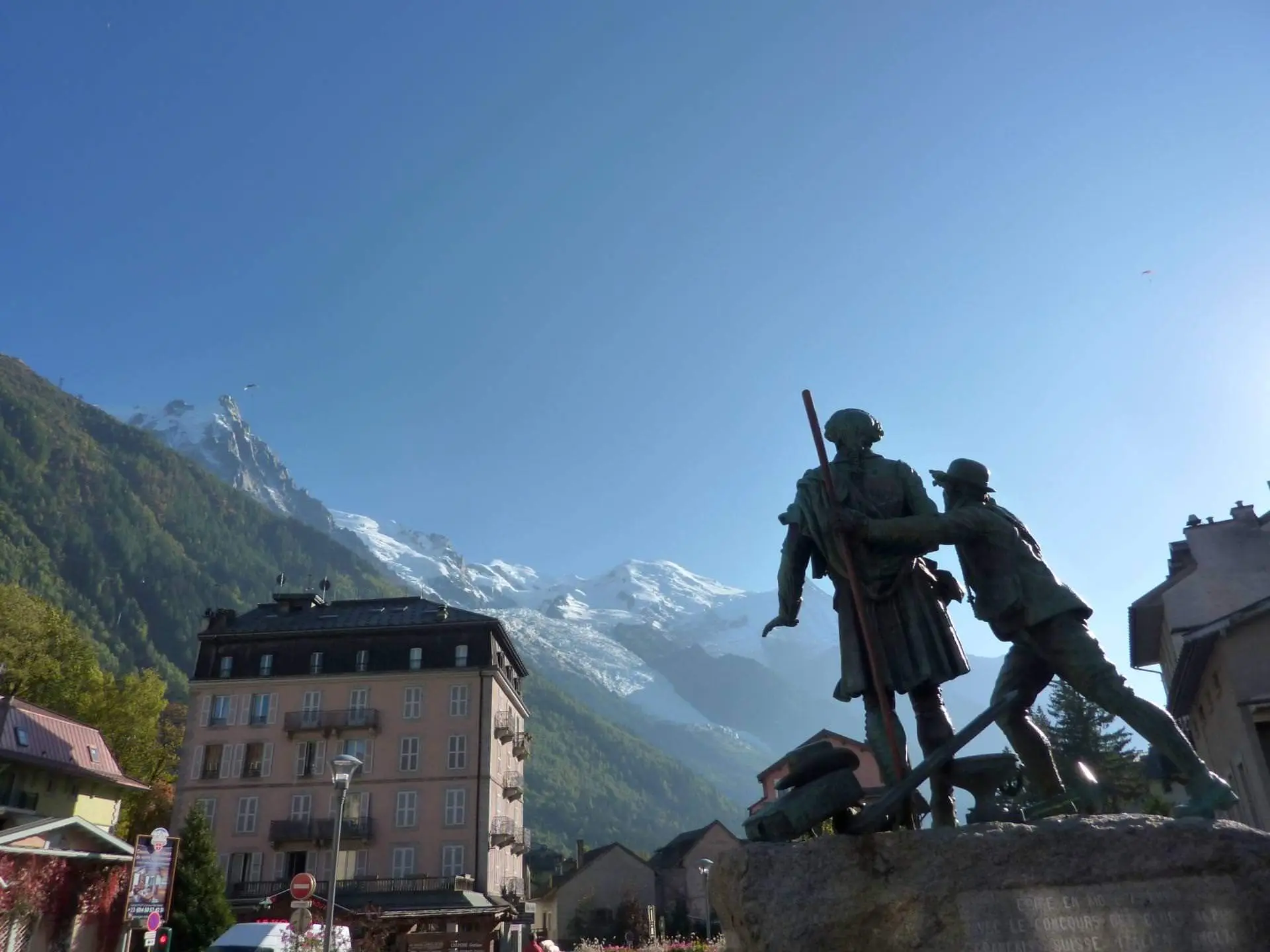
Mont Blanc, at 4,808m the highest peak in the Alps, defines the valley. The massif runs along the valley's southern edge; across from it, the Aiguilles Rouges nature reserve forms the northern boundary. The valley sits within Haute Savoie, in the Rhône Alpes region of France, and the alpine views from the valley floor, across to the Dôme du Goûter and the full face of the massif, are among the most dramatic in the French Alps.
Chamonix town sits at around 1,035m altitude. Argentière, further up the valley, sits at around 1,252m. Higher means more reliable snow, which matters for both skiing and rental appeal. Les Houches, to the southwest facing Saint Gervais les Bains, is lower and milder. The Glacier des Glaciers is one of several descending from the massif that give the valley its character and its name.
What it is like to live in Chamonix Mont Blanc
Chamonix is a resort commune, but it functions as a proper town, with schools, medical facilities, shops, restaurants, and public transport connections along the valley floor.
For mountain lovers, the valley functions differently from most ski resorts. There is a quieter interseason, but the resident population is large enough to keep services, restaurants, and amenities running through it. Despite its reputation for challenging skiing, the town is often busier with tourists in summer weeks than in winter ones.
English is widely spoken, the international resident population is large and well established, and the town has developed the practical infrastructure that makes permanent living here realistic.
Skiing and the Aiguille du Midi
The valley's ski area covers several separate domains. Le Brévent and La Flégère, above the town, are lift-linked to each other. Les Grands Montets above Argentière and Les Houches are separate. Moving between domains requires a bus or a car. Buyers used to large interconnected ski areas should factor this in.
The Aiguille du Midi cable car rises to 3,842m from the edge of the town and is the starting point for the Vallée Blanche, a 20km glacier descent that is one of the most well-known off-piste routes in the Alps. The lift runs year-round, which supports rental demand across both seasons. The Bellevue cable car above Les Houches gives access to a quieter ski area and, in summer, to walking routes towards the massif.
The terrain suits all levels, but the ski area is particularly well regarded among experienced skiers and off-piste riders. The Dôme du Goûter and the full face of the massif are visible from most of the ski slopes.
Year-round outdoor life
Summer brings trail running, hiking, mountain biking, via ferrata, climbing, and paragliding. The Aiguilles Rouges nature reserve, facing the Mont Blanc massif across the valley, has an extensive network of hiking routes. The trails around Les Bois and Les Pècles are well used by walkers who want to move above the treeline without committing to a full alpine route.
The Mont Blanc Ultra-Trail (UTMB) takes place each autumn and draws tens of thousands of visitors to the valley over race week. It is one of the largest trail running events in the world and has a direct effect on accommodation demand in that period. The valley also has a golf course at Les Praz, several spas, an indoor ice rink, and an aquatic centre with an iconic waterslide.
Areas and neighbourhoods close to Chamonix
The commune covers several distinct villages. Location within the valley affects price, sunshine, proximity to ski lifts, and the character of daily life.
Chamonix centre
Central Chamonix has the densest concentration of shops, restaurants, and services in the valley, and is the most walkable location. The Aiguille du Midi cable car sits at the foot of the town, within walking distance of most central properties. This is the highest-priced area in the valley, and apartments dominate the stock. Standalone chalets become scarcer and more expensive the closer you get to the centre.
The Clos du Savoy area, a short walk from the town centre, is a calm residential pocket with good views and less of the foot traffic that affects the central streets in high season.
Les Bossons
Les Bossons lies around 5 minutes south of Chamonix by road, at the foot of the Bossons glacier. It is a quiet residential area with views across to the Mont Blanc massif. Property prices here are generally lower than in central Chamonix. The Les Houches ski area is equidistant to the Brévent or Flégère lifts above the town.
Les Praz and Les Tines
Les Praz is situated a short distance north of the town centre by the base of the Flégère lift. It has a golf course, a quieter village feel than the centre, and is popular with buyers who want proximity to the town without being in the middle of it. Property here is highly sought, which is reflected in the prices.
Les Tines, a little further along the valley, is a peaceful residential area that benefits from good sunshine through the year. Some areas of the valley floor receive noticeably less direct winter sun than others, and this is one that does not.
Argentière
Argentière sits around 8km north of Chamonix. It has its own restaurants, shops, and train station, and functions independently without a car for day-to-day needs. The village is the base for Les Grands Montets, the valley's largest ski domain and a well-regarded area for serious skiers and off-piste riding.
Property prices in Argentière are generally lower than in central Chamonix, which makes it a common starting point for buyers entering the valley market. The village draws an international clientele, French, British, Swiss, and Scandinavian buyers are all present, and a number of properties are located within easy reach of the pistes. It is smaller and quieter than the main town, and buyers who want a wide range of services within walking distance will find less here.
Types of property for sale in Chamonix
The valley's real estate market covers apartments, traditional chalets, farmhouses, and new-build properties. Both resale and new properties come to market, and the range of prices and sizes is wider than in many similar properties found in comparable alpine locations. Buyers searching for a primary residence, a holiday home, or an investment property will find relevant stock across all the main villages.
Apartments
Apartments make up the majority of available stock, particularly in the centre and the villages.
Most apartments have a terrace or balcony with views of the surrounding mountains of the Mont Blanc Massif. Parking and a garage space are not universal; their presence affects both practical usability and resale value.
Some properties sit within a small condominium (résidence) with shared common areas, an entrance hall, and in some cases a garden. A number of apartments come to market with renovation potential; in those cases, the DPE (Diagnostic de Performance Énergétique, France's energy rating system) is worth reviewing, as lower-rated properties face increasing constraints on short-term letting under French regulations.
Chalets and farmhouses
Traditional chalets range from smaller demi-chalets through to new-build properties with ski rooms, saunas, and large terraces. Prestigious chalets in central Chamonix and prime locations reach prices in the millions of euros. A jacuzzi, swimming pool, or wellness area is standard at the top end of the market. A garage and a ski room are the practical amenities that define usability for ski properties.
The architectural character blends stone, wood, and slate with contemporary interiors. Historic farmhouses, including properties with a mazot (a small traditional Savoyard outbuilding, commonly converted to additional living space or a guest annexe), also come to market and form a distinct type for buyers wanting more land or a more rural setting. Some farmhouses are sold fully renovated; others are priced to reflect the work still needed.
Rental income and investment appeal
Unlike purely winter ski resorts, the Chamonix valley operates across two full seasons. The ski season runs roughly December to April; the summer outdoor season runs June to September. Rental demand is not confined to a single period, and that changes the financial profile of ownership here compared with a single-season resort.
Peak demand clusters around the high ski season in January and February, the Christmas and New Year period, and in summer, the UTMB race week in late August. Properties here serve as both a personal holiday home and a rental asset, and the international clientele supports demand from multiple source markets.
The valley's position as one of the most recognised alpine destinations in France has historically supported property values.