Properties for sale in Argentière range from small studio apartments to large chalets. The market attracts buyers across the spectrum: those after a full-time home in the mountains, a seasonal base, and those looking at the French Alps as an investment.
Where is Argentière?
Argentière is in the upper Chamonix valley, department of Haute-Savoie, in the French Alps, and forms part of the commune of Chamonix-Mont-Blanc. It sits at approximately 1,252 metres, higher than Chamonix town, which means more reliable snow cover at village level through the ski season.
Geneva airport is roughly an hour away by road. That puts Argentière within reach for weekend use from much of north-west Europe. Lyon is around two and a half hours. The village is connected to Chamonix by road, rail, and the Mont Blanc Express, a narrow-gauge train that runs the length of the valley.
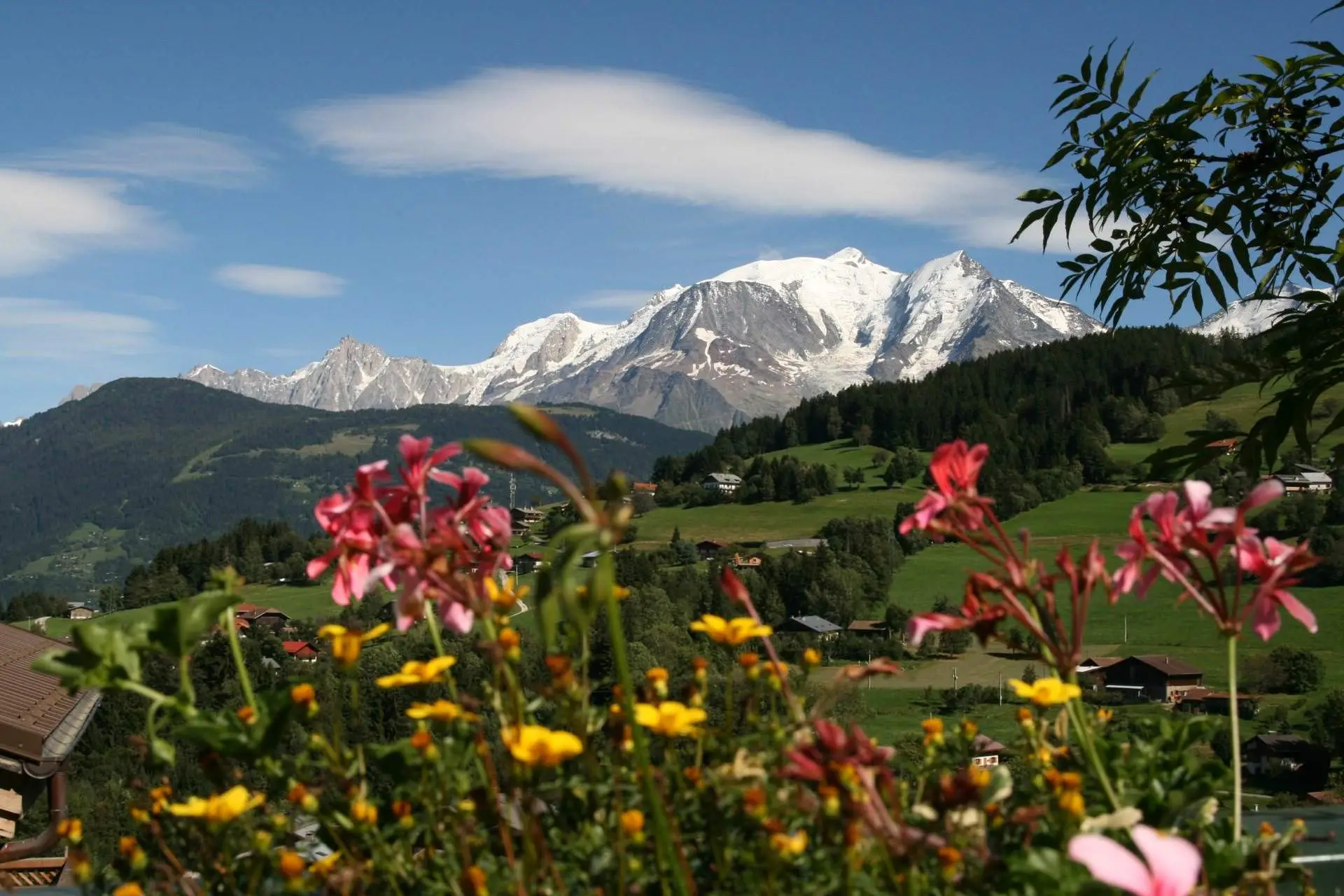
The Argentière glacier is visible at the head of the valley. The Mont-Blanc Massif forms the skyline to the south and east. For buyers coming from flatter places, the scale of the landscape takes some adjustment.
What Argentière offers buyers
Les Grands Montets, the ski area above the village, is the largest station in the Chamonix valley with some of the most technically demanding terrain in the Alps - steep runs and extensive off-piste. This is not a beginner resort. The skiing is high, wide, and largely above the treeline, with north-facing aspects that hold snow well into spring, and the area often keeps running later than lower resorts. The lifts start in the village and climb to the Lognan plateau at 1,972 metres. Most properties in the village are within walking distance of the lifts.
Families and intermediate skiers are better served by the Domaine de Balme, a few minutes further up the valley above Le Tour. Its slopes are wide, open and gentler, and it links across to Vallorcine. The valley's other ski areas, Brévent, Flégère (near the area of Les Praz) and Les Houches, are reached by bus or car.
In summer, the same terrain becomes a network of trails. The walking from Argentière is direct, out of the front door and into the mountains without needing a car. The Tour du Mont Blanc passes close by, and the valley sees a second wave of visitors during the hiking and trail running season.
The village is quieter than Chamonix. There are restaurants and a handful of shops. Buyers after a resort atmosphere with a full range of amenities tend to look further down the valley. Those who want the mountains without the noise tend to find Argentière exactly right.
Property types in Argentière
Apartments make up the largest share of available stock. Chalets are fewer in number and sit at the top end of the market.
Apartments
Studios start at around 19–25 square metres and are the entry point for the market. Larger apartments run to two and three bedrooms, with the better-specified examples featuring an open plan kitchen and living area, ski storage, private parking, and a south or east-facing balcony with mountain views.
Most apartments in the village are within walking distance of either the lifts or the village centre. Condition and specification vary considerably. The DPE (Diagnostic de Performance Énergétique, France's energy rating system) is worth checking early in any search. Rating affects both rental eligibility and value; more on this in the investment section below.
New-build apartments exist alongside the resale stock. On new-builds placed in a managed rental scheme, buyers can reclaim the 20% TVA (French VAT) included in the purchase price. This reduces the effective purchase cost, though the scheme carries its own conditions.
Chalets
Chalets in Argentière range from traditional timber and stone buildings to recently constructed or renovated properties with contemporary interiors. At the top end, these include private pools, saunas, cinema rooms, and dedicated ski rooms with boot warmers and drying space. A fireplace in the main living room is common, and a few chalets have an outdoor swimming pool.
The better-designed examples face south or south-east to maximise natural light and frame views of Mont Blanc or the glacier. Usable outdoor space (a south-facing terrace, a garden at lower altitudes) is what separates one chalet from another at this end of the market.
Chalet stock is limited. There is not a large pipeline of new supply, and the planning constraints on high-altitude Alpine sites are considerable.
Houses and plots
Detached houses with gardens do appear on the market in Argentière, though less frequently than in the lower valley. They suit buyers who want outdoor space and a more domestic feel than a ski apartment provides, and families in particular. Specification tends to be more modest than chalets.
Buildable plots come to market occasionally. These suit buyers who want to commission a new build rather than compromise on an existing property.
Property prices in Argentière
Price per square metre varies by type, location within the village, condition, and energy rating. There is no single reliable figure.
Investment and rental potential
Argentière's rental market is driven primarily by the ski season, with a secondary peak in summer from walkers, trail runners and climbers. Properties within walking distance of the ski lifts at Les Grands Montets achieve the strongest occupancy in winter.
Supply of new stock at high-altitude Alpine resorts is structurally constrained. Buildable land is limited, planning permissions are restricted, and construction costs at altitude are high. This means the stock of available properties does not grow quickly. In markets where demand is sustained and supply is tight, prices tend to hold and, over cycles, rise. For the French Alps broadly, analysts have estimated price growth in the 4–7% range in the current market cycle, a consequence of this scarcity rather than speculative pressure.
The DPE rating of a property has become a direct factor in both rental value and capital value. Properties rated A or B command a 10–15% premium over comparable stock. At the other end, G-rated properties (passoires thermiques, or thermal sieves) face discounts of up to 25% and are subject to tightening restrictions under French rental law. The trajectory of that regulation is one-directional. A property that has been completely renovated with a geothermal system or similar low-carbon heating can move from one end of that scale to the other. Buyers looking at older, poorly insulated properties should factor the cost of improving the DPE rating into their calculations.
The commune of Chamonix-Mont-Blanc regulates holiday lets more tightly than most French resorts. The owner of a second home needs an authorisation from the commune before letting to holidaymakers. It lasts three years, is personal to the owner, and does not pass to a buyer when the property is sold or move to another property. Each owner can hold one. The property needs a DPE rating of E or better, which rules out F and G ratings, holiday letting must be permitted by the building's copropriété (co-ownership) rules, and every let must display a registration number issued by the commune. A main residence can be let for up to 120 days a year without authorisation, though registration still applies. A buyer who plans to let cannot assume that the current owner's letting arrangement will continue, and needs to allow for the application in their timing.
Buying property in the French Alps
In France, a notaire (a notary, an independent legal officer appointed by the state) handles all property transactions. Once a price is agreed, the process moves to the preparation of a compromis de vente, a preliminary contract that sets out the terms of the sale. After signing, the buyer has a statutory ten-day cooling-off period. The final acte de vente (the deed of sale) is signed eight to twelve weeks later, once searches are complete and financing is in place.
Argentière sits in mountainous terrain, and buyers are required to review mandatory risk reports on avalanche and landslide exposure issued by the local commune. These form part of the standard documentation attached to any sale and should be read before the compromis is signed.
Financing is available through French banks and international lenders who operate in the cross-border Alpine market. French mortgage criteria and processes differ from those in the UK, the US, and elsewhere.
Purchase costs in Argentière
On resale properties, buyers should budget 7–10% of the purchase price for the frais de notaire, notary fees and transfer taxes combined. This is paid by the buyer and is not negotiable. On new-build properties, the frais de notaire are considerably lower, typically 2–3%, because transfer taxes are reduced.
Buyers of new-builds who place their property in a managed rental scheme may be able to reclaim the 20% TVA included in the purchase price. The conditions attached to this scheme, minimum rental periods and management requirements, need to be understood before purchase, but the saving is material where it applies.