Property for sale in the Vallée du Brévon suits buyers at most budgets, whether they are after a primary residence, a holiday home or an investment in the French Alps at a lower entry point than the established resort areas. The properties for sale range from village apartments to detached chalets on open land.
The Vallée du Brévon: Haute-Savoie's Alpes du Léman
The valley runs south from the lower Chablais through the Préalps of Haute-Savoie, in the Rhône-Alpes department. It forms part of the Alpes du Léman, the band of mid-altitude mountains south of Lac Léman (Lake Geneva). To the east lie the Chablais massif and the Portes du Soleil; to the west, the land falls away toward the lake. Lake Annecy is about an hour to the south.
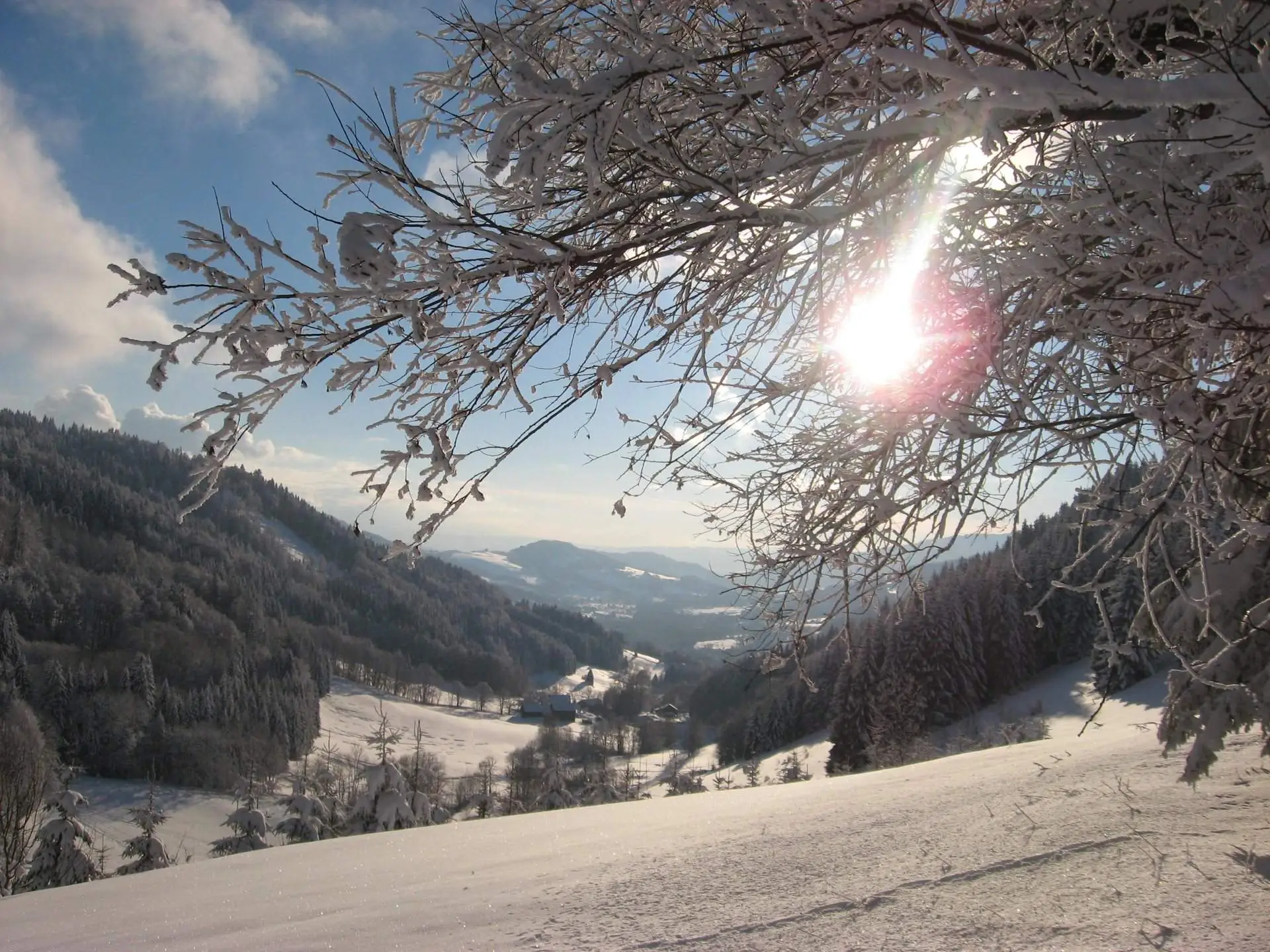
The Brévon river runs its length. This is a V-shaped valley, with pasture and forest rising steeply on both sides, and its four communes sit along a floor at roughly 700m below ridgelines that reach over 1,700m. The Mont Blanc massif shows from higher ground on clear days, though the valley itself looks toward closer Chablais summits.
The area is less known internationally than the Chamonix valley or the Portes du Soleil resorts.
The Villages: Bellevaux, Lullin, Reyvroz and Vailly
Bellevaux is the largest of the four communes and carries most of the valley's services: a village centre with a small range of shops, a school and a church. It is also the base for the Hirmentaz-la Chèvrerie ski area, which gives it some seasonal activity without the pressure of a resort town.
Lullin, Reyvroz and Vailly are smaller and quieter. Each is a working alpine village rather than a resort. They suit buyers who want a peaceful setting and don't mind a short drive for shops, schools or the doctor. Reyvroz and Vailly sit lower in the valley, closer to Thonon-les-Bains; Lullin is on higher ground to the west.
For a primary residence, proximity to the school and services in Bellevaux, or to Thonon, tends to influence the choice of village more than anything else.
A Quieter Corner of the French Alps
The Brévon Valley is not a ski resort. Property prices are not built around lift access. The Portes du Soleil and Grand Massif domains are both reachable by road, but the valley belongs to neither.
There is no resort infrastructure, no guaranteed winter occupancy and none of the seasonal price inflation that comes with a busy ski station. In return, the valley keeps a permanent community and a steadier pace through the year. The downside is fewer amenities within the valley itself than near the larger ski resorts.
Access: Geneva, Lake Annecy and Mont Blanc
Geneva airport is within easy access by car, roughly an hour from most of the valley. Thonon-les-Bains, the nearest town of any size, is about 25 to 30 minutes down toward the lake. Annecy is around an hour to the south, and the Chamonix valley a little over an hour to the east.
For skiing, the Hirmentaz-la Chèvrerie ski lifts sit within the valley itself. The Portes du Soleil resorts of Morzine and Avoriaz are a 30 to 40 minute drive, and Les Gets is similar.
A car is necessary here. Public transport to Thonon is limited, and the access roads need winter tyres once the snow arrives.
What Properties Are Available in the Vallée du Brévon?
Most of the stock is traditional Savoyard construction: heavy timber frames and local stone, with the wide roof overhangs typical of Haute-Savoie. This reflects the valley's farming history rather than any resort development. Mountain views come as standard across much of the rural stock.
Modern chalets exist alongside the older properties. A new chalet here is usually designed around its panoramic views, with large south-facing glazing and abundant natural light. Property features common to a contemporary chalet include open living space and terraces angled toward the surrounding peaks and the sun.
Traditional Chalets and Farmhouses
The detached chalets tend to sit on generous land, often with large plots in quiet positions away from the villages. Built from stone and timber, they usually run across two or three floors, with terraces toward the sun and the mountains. Many older plots include a mazot, a small traditional granary, now used for storage or converted into accommodation.
Farmhouses come in two states. Some are fully renovated and ready to live in; others need work and sell at a lower price as a result. Renovation means French planning permission, local artisans and a realistic timeline rather than a quick turnaround. The valley also turns up the occasional atypical house: a converted barn, or a layout that breaks the standard chalet template.
Apartments and Village Homes
Apartments here sit within village buildings or small résidences rather than the large purpose-built complexes of the resorts. An apartment located in or near a village centre is a lower-maintenance, lower-cost way into the valley, with amenities on the doorstep. Ground-floor units with direct access are part of the mix.
Village houses form a separate category: stone properties, often semi-detached or at the end of a terrace, with more living space than an apartment and occasionally a small garden or parking. Modern comfort varies. Some have been fully renovated with contemporary fittings; others keep their original character and need updating.
Property Prices in the Vallée du Brévon
Prices in the Brévon Valley sit well below those in the established Haute-Savoie ski resorts. A buyer priced out of Morzine, Les Gets or the Chamonix valley will find it considerably more affordable.
The gap reflects what the valley is and isn't: no ski station, a rural rather than resort character, and a smaller international buyer pool. The lower prices are the right price for a quieter valley with fewer amenities.
The Brévon Valley as an Investment
The investment case rests on entry cost. Buying here costs less than in the prime Haute-Savoie resorts, in a region with a long record of property values rising over time.
Rental demand is the caveat. This is not a resort with reliable winter occupancy, so short-term letting income is less predictable than in Morzine or Avoriaz. Summer demand from walkers and cyclists is lower than in the big resort areas. The valley suits buyers with a longer horizon: those who will use the property themselves and let it occasionally, or who want a foothold in Haute-Savoie at a lower price and accept slower resale.
Living in the Vallée du Brévon
The year splits cleanly. In summer the valley is walking and cycling country, with trails along the ridges and a road that draws cyclists; Lac Léman is 30 to 40 minutes away for swimming. In winter the Hirmentaz-la Chèvrerie ski lifts run from above Bellevaux, and the Portes du Soleil ski resorts are a short drive for anyone who wants more terrain.
Services follow the pattern of a rural valley. The collège (secondary school) and the hospital are in Thonon, and a doctor's practice operates within the valley. Cattle farming still works the land across all four communes, and the population is mostly permanent residents rather than seasonal owners, with a smaller international contingent among them.
As a primary residence, it works for those who can work remotely or commute to Thonon, Geneva or Annecy. As a holiday home, it suits buyers who would rather have a genuine alpine valley than a resort.