
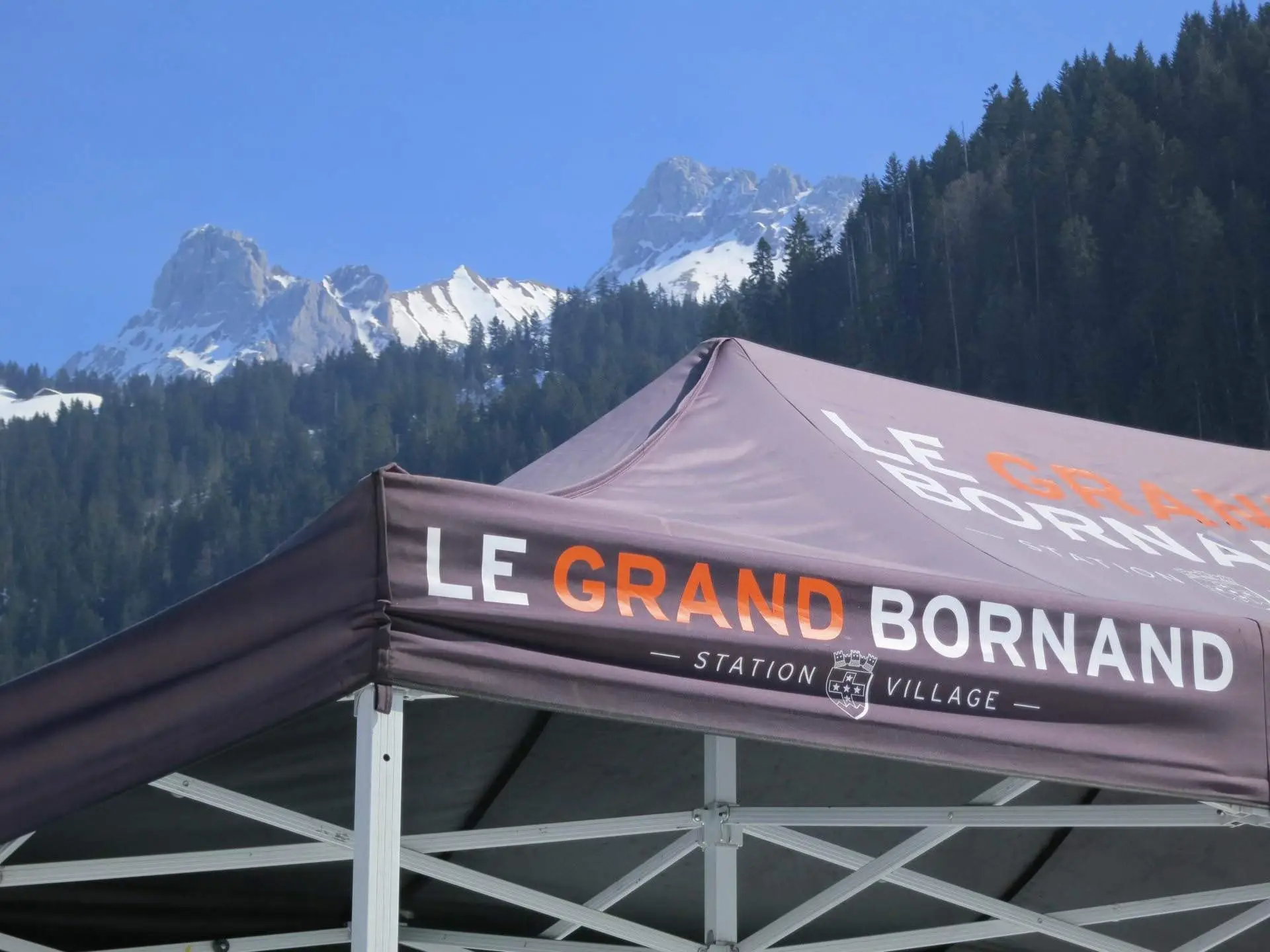
Le Grand Bornand sits in the Bouchet Valley at 1,000 metres, in the Aravis mountain range in Haute Savoie. It is part of the northern Alps, the alpes du nord, a cluster of ranges that includes some of the most in-demand ski destinations in France. The surrounding peaks rise steeply on all sides, and the village has been there long enough that it does not feel built around the mountains so much as grown alongside them.
Geneva Airport is roughly an hour away. Lake Annecy is around 45 minutes by road. Neither is unusually fast by alpine standards, but both are reliable year-round, which matters for a location that draws visitors in both seasons.
This is a working village. Farms operate in the valley. The village centre has a church, a weekly market, a school. People live here who have no particular interest in skiing. That quality (the sense that the place would carry on without the tourism) is part of what holds its value.
Skiing, La Clusaz, and year-round outdoor life
The ski area covers 86km of slopes and 30 lifts. When linked with neighbouring La Clusaz, the combined terrain reaches 220km, placing it among the larger ski areas in the French Alps and giving skiers and snowboarders a range of terrain that takes more than a week to cover properly. Le Grand Bornand holds the Family Plus label, a national designation that reflects the investment in facilities and infrastructure aimed specifically at families with children.
The upper part of the commune, Le Chinaillon, sits at 1,300 metres and has direct access to the ski areas. It functions as a separate village within the commune, with its own character, quieter, higher, oriented more squarely towards the slopes. The highest points of the ski area are accessible from here.
Winter activities cover skiing, snowboarding and ski touring. In summer the mountain changes entirely. The slopes become hiking trails, and all the family can cover the same ground on foot that skiers cover in winter. Rock climbing is available on the limestone faces of the Aravis. The whole family is well served by the range on offer. The sunshine hours at altitude are long from June onwards.
Village culture and local life
Reblochon cheese is made in this valley. Not generically: Le Grand Bornand and the surrounding Aravis farms are part of the designated production zone for Reblochon de Savoie AOP, and the connection between the village and the cheese is commercial rather than decorative. You can buy it from producers directly. The cattle that produce the milk graze on the slopes above the village in summer.
The village calendar runs through the year. There are festivals, markets and cultural events in both winter and summer. The restaurants here serve the local community as well as visitors, which means they stay open between seasons. French mountain life in a village like this has a rhythm that is not entirely dependent on whether the lifts are running.
Property types and prices in Le Grand Bornand
Property for sale in Le Grand Bornand covers a wide range of types and price points. What the market consistently lacks is supply at the top end near the village centre.
Chalets
The traditional wooden chalet is the dominant property type in Le Grand Bornand, and the one most buyers are looking for. At the high end of the market, contemporary chalets, which blend traditional alpine construction with modern interiors, reach valuations of several million euros. These properties tend to include features such as an indoor pool and sauna, and are built for families who want a property that works as hard in summer as it does in winter.
Farmhouses and renovation projects
Renovated farmhouses represent a distinct part of the market. For buyers interested in a project, there are historic farmhouses, some dating from the late 1700s, available with planning permission for extension or conversion, at around €1m. These properties often come with a garden and outbuildings. The condition of the structure, the scope of permissions granted, and the likely cost and timeline of works vary considerably.
Apartments and Le Chinaillon
Apartments are the most accessible entry point to the Le Grand Bornand market. Two-bedroom flats are a realistic option for buyers whose budget does not extend to a chalet but who want a property with a balcony and direct access to the mountains.
Le Chinaillon, located at 1,300 metres, is the ski-focused part of the commune. Apartments here sit closer to the slopes and snowboarding terrain, and the extra 300 metres of altitude makes a practical difference to snow reliability across the season. Le Roc des Tours is one development in Le Chinaillon with properties available for sale. For buyers whose priority is skiing, Le Chinaillon is the more straightforward choice; for those who want village life as well as slope access, the lower village offers more.
Investment appeal and the rental market
Around 80% of properties in Le Grand Bornand are second homes. That figure is almost eight times the national French average, and it shapes the rental market in a specific way: there is an established infrastructure for letting, a pool of guests who return year after year, and a local economy built around short-term occupancy. For an investment buyer, this is not a market they need to build from scratch.
Both the ski season and the summer walking and activity season generate rental income. Holidays here are not limited to school ski weeks, and the two seasons together produce a longer effective letting calendar than a purely winter-oriented destination.
New-build properties in France are eligible for a leaseback scheme. The buyer purchases the property and leases it back to a management company, which handles the letting. In return, the buyer reclaims the 20% VAT on the purchase price, receives a guaranteed rental income, and retains personal use, typically between two and six weeks per year. The specifics vary by development.
Properties rated E, F or G on the French energy performance certificate (the DPE, Diagnostic de Performance Énergétique) face increasing restrictions on being let as holiday or residential rentals in France. The regulations around this are tightening progressively. It is worth establishing the DPE rating of any older property before purchase if rental income is part of the plan.
Demand for well-positioned chalets near the village centre has consistently outrun supply. There is limited land on which to build, and the planning framework in the Aravis is restrictive.