
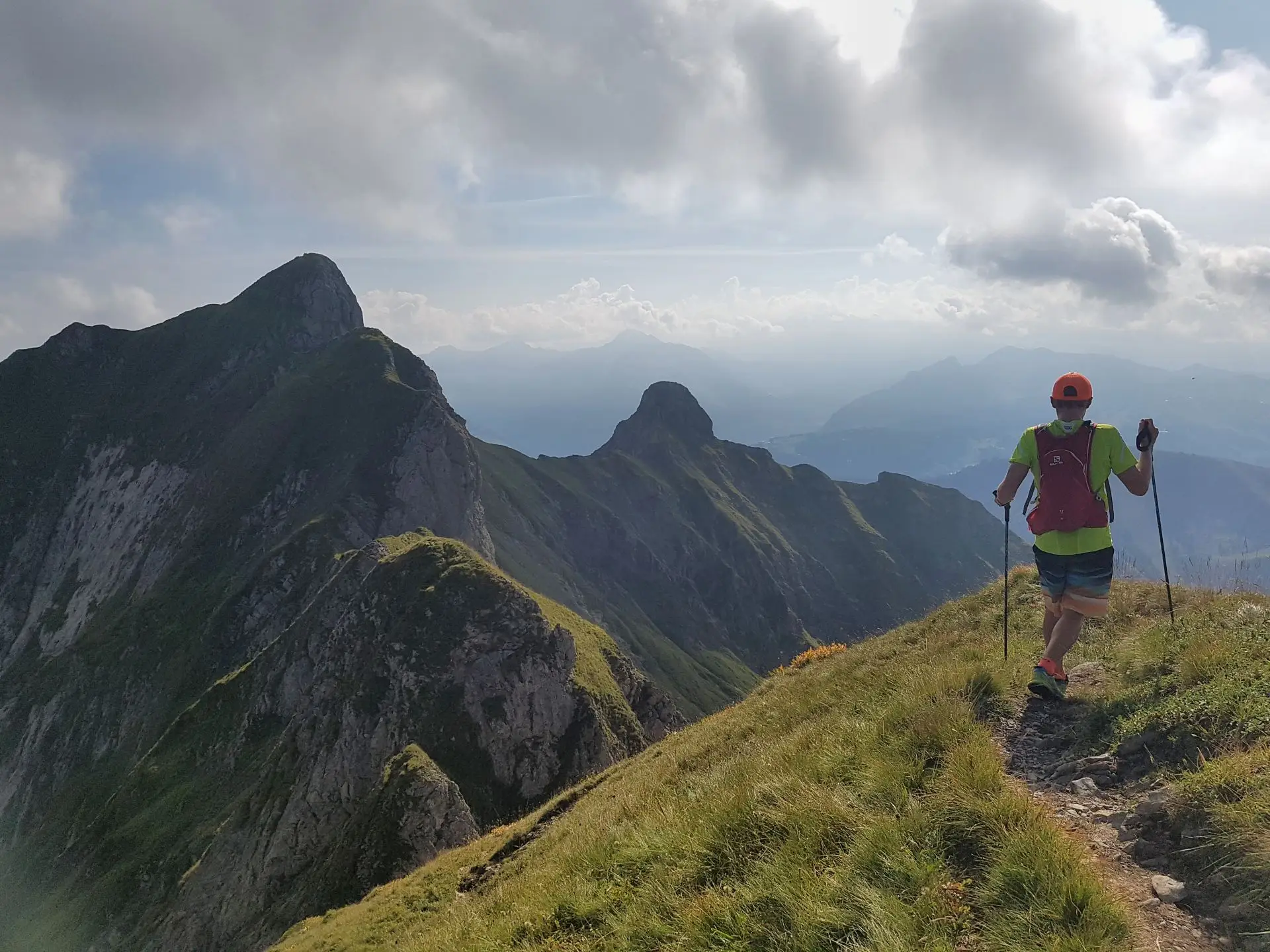
The Collines du Léman are the hills behind the southern shore of Lake Geneva, in the French department of Haute-Savoie. The department reaches from the lake in the north to Mont Blanc in the south, and this corner sits at its gentler, lower end. The ground here is vineyards, orchards and farmland on rolling hills, well below the high Alps.
That makes it a quieter, greener part of the French Alps than the resort valleys to the south. The hills hold the sun, the lake sits below, and most of the villages look out across the water to the Swiss shore.
Easy access to Geneva
Geneva is close enough to commute. Many people who live in the Collines du Léman work in the city or run a business there, then come home to the French side in the evening. Geneva's international airport is within easy reach by road for buyers coming and going from another country.
The lake itself is part of the network. CGN ferries cross from the French shore at Thonon and Évian to Lausanne and Geneva, so the water is a route as much as a view. Daily life, though, stays firmly French: the markets, the schools, the pace of a rural commune rather than a city suburb.
Direct access to the French Alps ski resorts
The ski resorts of the French Alps are within driving distance, so the area works as a year-round base rather than a winter-only one. The Portes du Soleil resorts, Morzine, Châtel and Les Gets among them, are roughly an hour away by car.
The Collines du Léman is hill country, not a ski area. The slopes are a drive away, not at the end of the road. For buyers who want the mountains nearby but not a resort on the doorstep, that distance is the point.
Towns and villages of the Collines du Léman, Haute Savoie
The villages here are built in the older Alpine style, stone and timber, rather than the purpose-built look of a modern resort. They were lived-in places long before tourism arrived, and they still are.
That is the main difference from a resort village. These communes do not empty out between seasons. They keep their own schools, shops, doctors and weekly markets, and stay occupied through the year.
Chens-sur-Léman
Chens-sur-Léman sits on the lake shore itself, at the western end near the Swiss border, where a position on or near the water carries a premium and the higher-value lakeside property tends to be found.
Thonon-les-Bains
Thonon-les-Bains is the principal town of the area, larger than the surrounding villages and where most daily needs are met. Its harbour at Port de Rives sits below the upper town, linked by a short funicular, and the town's thermal spring gives it the "les-Bains" in its name. There is a town centre and a train station, and villas near the waterfront are among the most sought-after property in the town.
Maxilly-sur-Léman
Maxilly-sur-Léman lies just east of Thonon, on the road toward Évian-les-Bains, the spa town next along the shore. Plots here tend to be larger than in the lakeside communes, so Maxilly suits a buyer who wants more land and a quieter setting while staying within reach of the water.
Farmhouses, modern villas and alpine chalets
The property across the area falls into a few broad types: old stone farmhouses, modern villas and alpine chalets, with apartments and larger residences in and around Thonon. The mix is wider than in a resort, where almost everything is a chalet or an apartment.
Because the houses sit on hillsides above the lake, many of them look out over the water. From the higher ground the views are panoramic, and some properties have an unobstructed, breathtaking view across Lake Geneva to the mountains on the Swiss side.
A year-round French Alps lifestyle
Life here is tied to the lake and the hills. In summer the lake is for swimming, sailing and the ferries; the hills are for walking and cycling. In winter the slopes are within reach. The weekly markets, the schools and the shops mean the practical side of living here is covered without a drive to the city.
The food is regional Savoyard. Tartiflette, baked potato with reblochon cheese, onions and lardons, is the dish most people know. Berthoud, melted Abondance cheese eaten with bread and potatoes, is more local still, a speciality of the Chablais hills around Thonon.
Property prices compared with the ski resorts
For a similar budget, property in the Collines du Léman generally buys more space than property in the high ski resorts, where prices run higher. You are paying for lake and hills rather than for ski-in access, and that trade tends to give more house and land for the money.
Set this in context. Haute-Savoie covers very different ground, from this lake-shore hill country to the high-Alpine resorts, and property in the mountain resorts carries its own, separate investment case. A chalet above a ski lift and a farmhouse above the lake answer different questions.
Rental demand near Lake Geneva
Property near Lake Geneva holds its value, because demand for it stays high. The shore is a limited stretch of ground, and the lake anchors the appeal: a position a stone's throw from the water is the kind that holds its price. In the more sought-after hamlets, that demand is steady rather than seasonal.
Tourism supports rental income too. The area draws visitors in summer as well as winter, so rental demand does not rest on a single peak the way it can in a pure ski resort.